

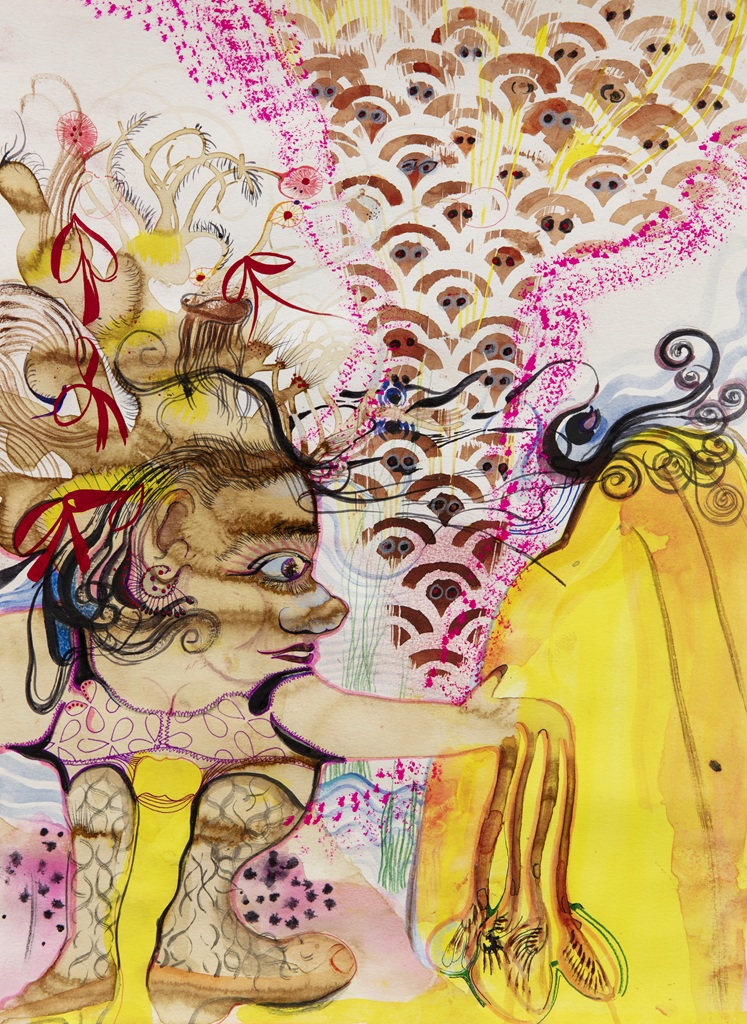
A vivid meditation on colonial histories, global trade, and feminine power, Banerjee’s exhibition illuminates the transnational imagination.
As the Espaces Louis Vuitton reach their twentieth year and the Hors-les-murs programme of the Fondation Louis Vuitton marks a decade, Espace Louis Vuitton Tokyo presents an exhibition dedicated to the work of South Asian diaspora artist Rina Banerjee, whose practice transforms a remarkable array of found materials into mystical female sculptures and complex phantasmagorical installations. The exhibition forms part of the Fondation’s international Hors-les-murs initiative, which presents works from its collection in Espaces Louis Vuitton across Tokyo, Munich, Venice, Beijing, Seoul, and Osaka, extending the institution’s cultural programme to audiences around the world.
In the restless theatre of contemporary art, few voices conjure worlds as intricate and evocative as those of Banerjee. Her work unfolds like a constellation of memories: objects gathered from distant geographies, histories folded into delicate materials, and stories suspended somewhere between myth and migration. Sculpture, installation, and narrative intertwine in her practice, forming a poetic topography of identity where personal memory meets the sweeping tides of global history.
Born in Kolkata in 1963 and now based in New York City, Banerjee’s life has been shaped by movement across continents. After spending time in London and Manchester, her family eventually settled in the United States when she was seven years old. These early migrations would later inform a body of work that reflects on displacement, identity, and the layered histories of colonial exchange.
Before turning fully to art, Banerjee pursued an unexpected academic path. Encouraged by her parents, she studied polymer engineering at Case Western Reserve University in Cleveland. The discipline, concerned with the design and transformation of materials such as plastics, fibres, and rubbers, left a subtle yet lasting imprint on her artistic thinking. The precision of engineering continues to echo in the intricate structural logic of her installations.
Banerjee later received a Master of Fine Arts in painting and printmaking from Yale University in 1995. Her emergence onto the international stage soon followed, notably through her inclusion in the influential exhibition Out of India: Contemporary Art of the South Asian Diaspora at the Queens Museum in 1997 and the Whitney Biennial at the Whitney Museum of American Art in New York City.
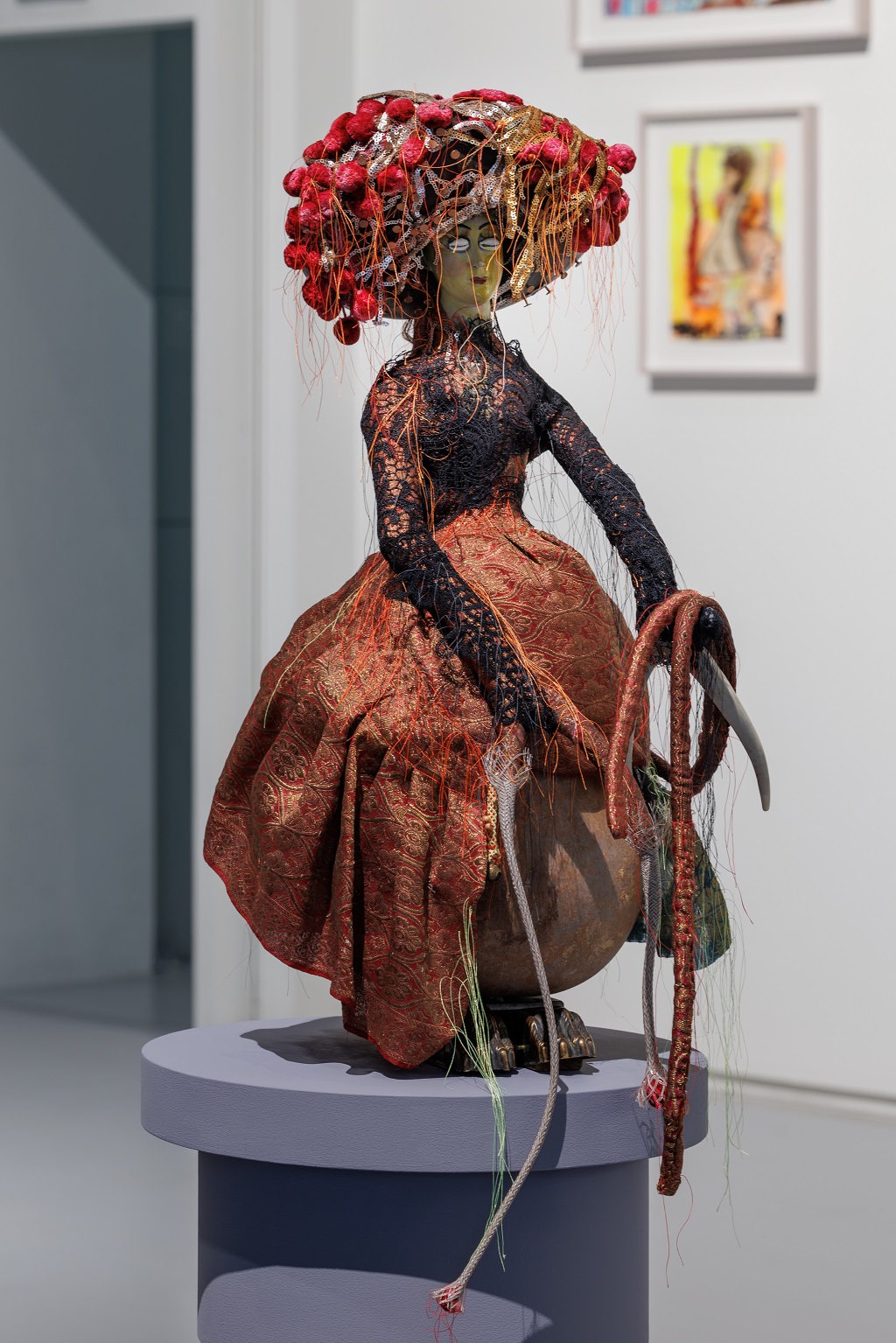
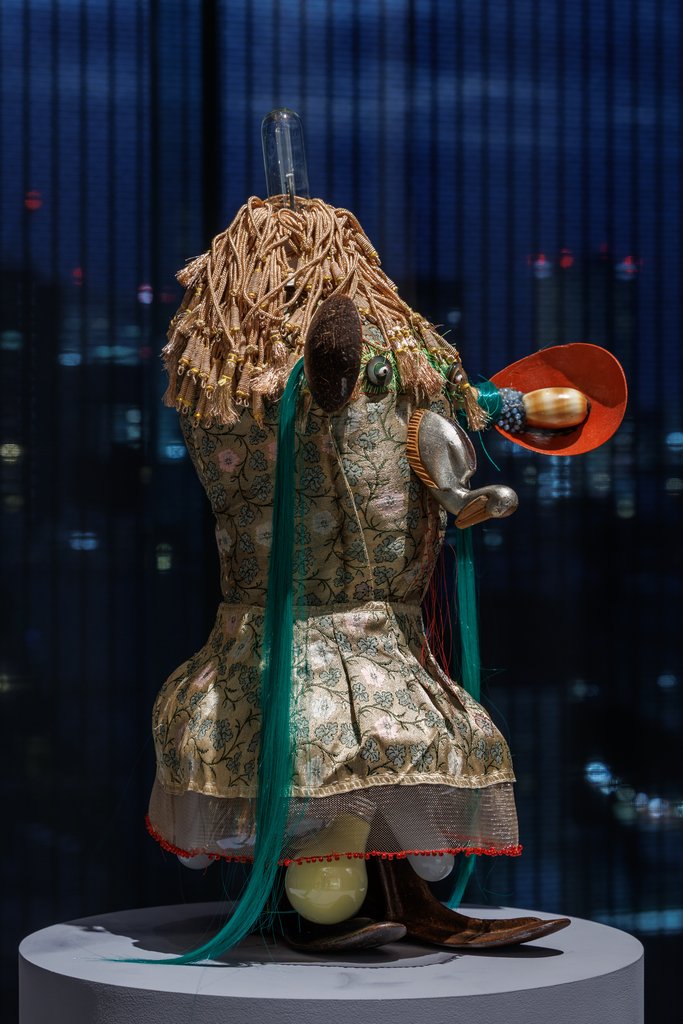
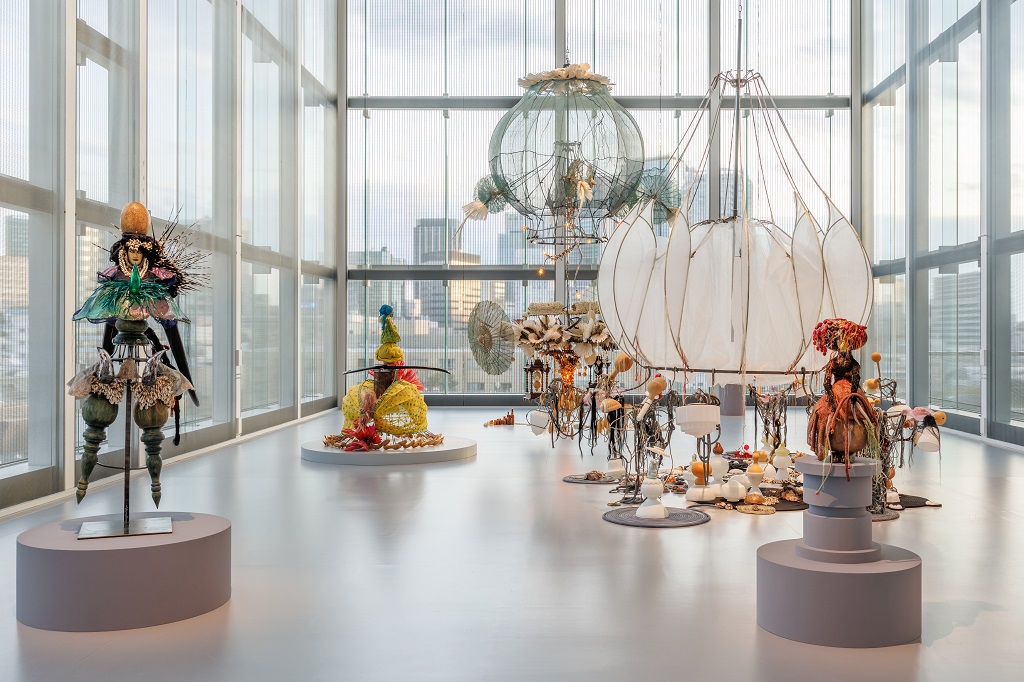
Banerjee’s artistic language is built from a remarkable gathering of materials that carry traces of global exchange and colonial histories. Textiles, ostrich eggs, feathers, glass chandeliers, cotton threads, and coconut powders appear alongside everyday domestic objects, many originating from what the artist refers to as the “tropical zone,” or the Global South. Through these unlikely combinations she constructs intricate sculptures and environments that feel both ancient and futuristic, their forms hovering between fantasy and archaeology.
Her paintings draw inspiration from historical visual traditions including Indian miniature painting, Chinese silk painting, and Aztec drawings. Working between abstraction and representation, Banerjee creates images that resist the colonial gaze while retaining a striking visual allure. As the artist has remarked, “The viewer is both pleasured by the exotic object and simultaneously perplexed by its assertion.” Each work is accompanied by an expansive poetic title, transforming language itself into an extension of the artwork.
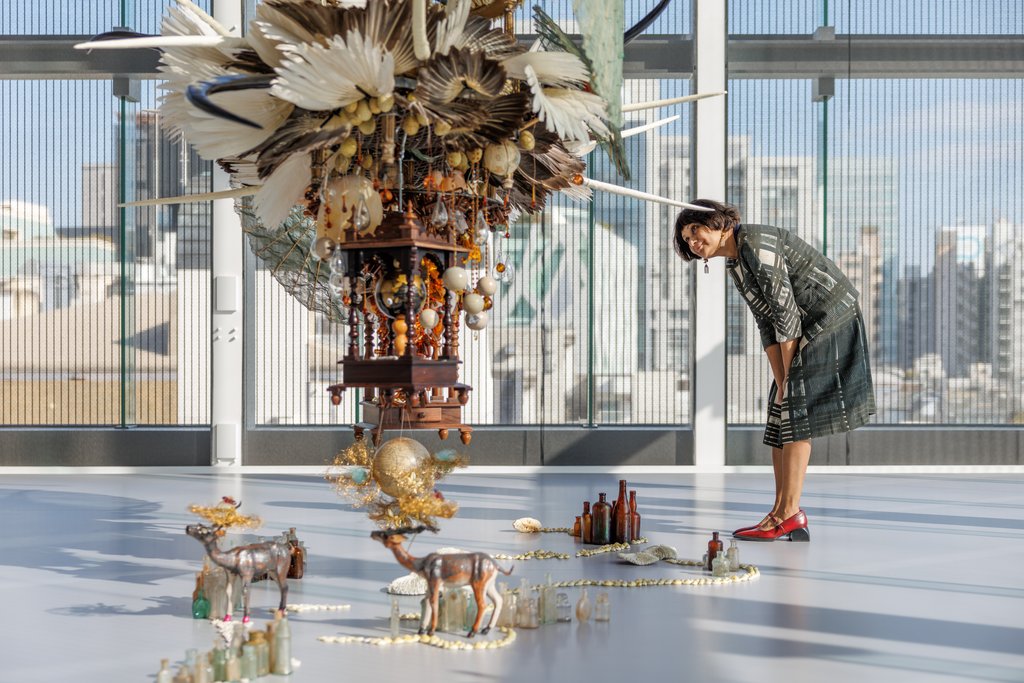
The exhibition in Tokyo presents nineteen works ranging from sculptures and installations to paintings, exploring themes of international travel, migration, and the enduring legacies of colonial history. At the centre of the presentation stands the monumental installation In an unnatural storm a world fertile, fragile and desirous, polluted with excess pollination… (2008), inspired in part by Jules Verne’s celebrated novel Around the World in Eighty Days. Suspended from the ceiling like a luminous canopy, the work releases a cascade of objects that evoke both the wonder and the precarity of global travel.
Alongside it, the installation Black Noodles (2023) reflects on the international trade of human hair and the political realities surrounding its circulation. The work underscores Banerjee’s continuing interest in how materials move through global markets, carrying with them stories of labour, commerce, and cultural symbolism.
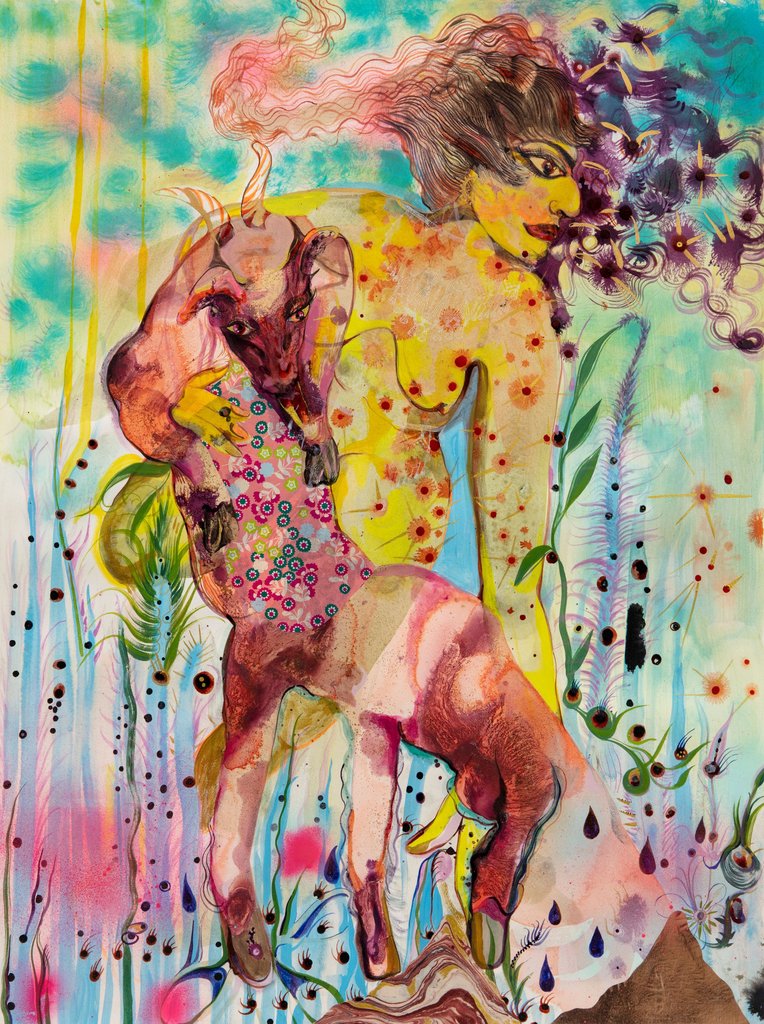
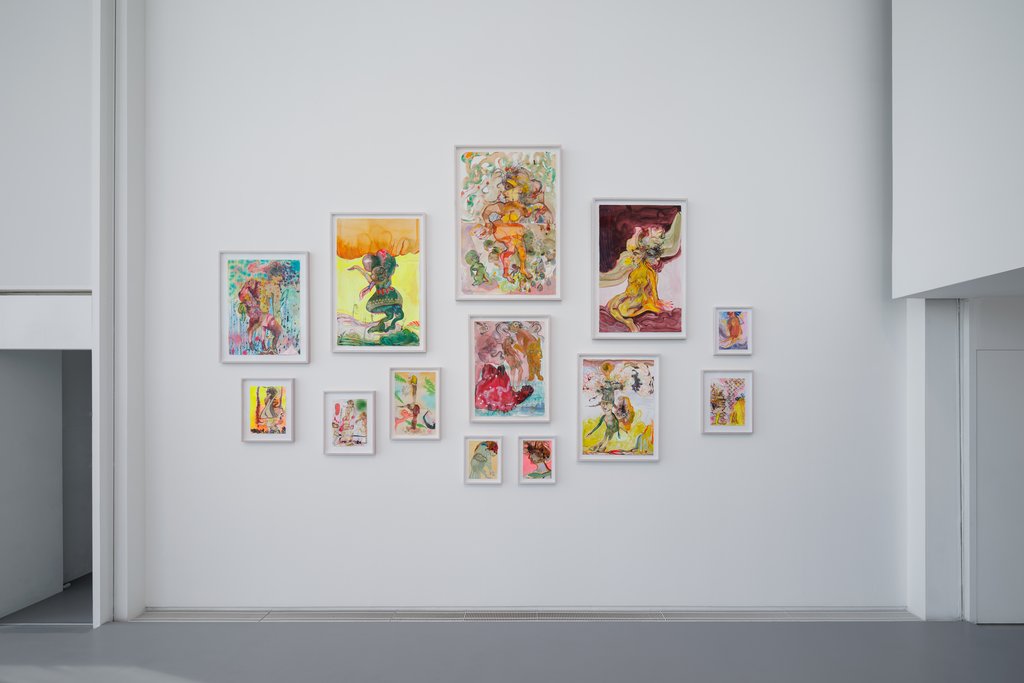
Several new paintings created in 2026 are also included in the exhibition. Drawing upon her extensive knowledge of pre-1900 South Asian art, Banerjee integrates regional motifs and iconographies to create female figures that often echo the presence of Hindu goddesses. These figures appear fluid and multifaceted, reflecting the artist’s own experience as an immigrant whose life has unfolded across different continents and cultures.
Through her layered installations and luminous sculptures, Banerjee invites viewers to reconsider the notion of identity as something fixed or singular. Instead, it emerges as a living composition of histories, geographies, and materials. Within the spaces of Espace Louis Vuitton Tokyo, her works stand as quiet yet powerful meditations on migration, memory, and the ever-evolving idea of belonging.