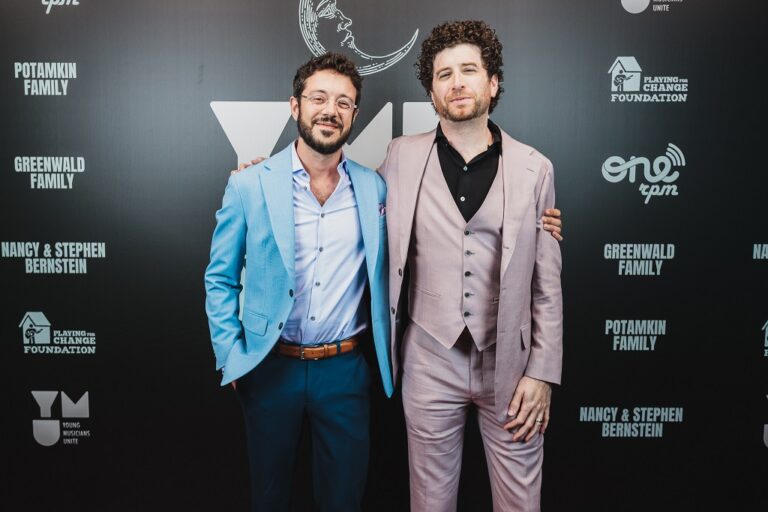
Sammy Gonzalez Zeira, CEO and Founder of Young Musicians Unite, shares how a bold vision evolved into Florida’s largest provider of free in-school music education. Since 2013, YMU has moved beyond traditional programming to build a countywide ecosystem designed to ensure every child has access to music, regardless of background. With ambitious growth, a sold-out gala, and a mission rooted in equity and culture, Zeira discusses the systems, partnerships, and community energy driving YMU forward and how Miami-Dade could become a national model for sustainable arts education at scale.
Young Musicians Unite has grown into Florida’s largest provider of free in-school music education. What has been the driving force behind that growth since 2013?
The driving force behind our growth has been a clear, focused goal: to guarantee that every child in Miami-Dade has access to a music education. As we’ve scaled, one thing became clear. You don’t reach every child through isolated programs. You have to build infrastructure that connects everything.
Across this country, billions are invested into arts education, yet there is no coordinated, countywide system anywhere in the US. Access still depends on where a child lives, what school they attend, and which organizations happen to be nearby. Organizations are doing strong work, but often in silos without shared alignment or infrastructure. That’s not a system, it’s a patchwork.
So we made a decision early on to build something different. That means ensuring every student has access to music during the school day if they want it, and then creating real pathways after school focused on skills, discipline, and career development through performances, mentorship, and real-world opportunities.
At the same time, we are building an ecosystem, partnering with other arts organizations, aligning communities, and working closely with schools, government, and philanthropy. No single organization can serve the third largest school district in the country alone.
This fall, our goal is to serve over 16,000 students across 105 schools every single week. But the bigger picture is building a system that guarantees access to music education across the entire county, and making that system sustainable. If we can do that here in Miami-Dade, we can build a model that others can follow.
This year’s gala is already sold out with 900 attendees. What do you think is resonating most with supporters right now? What can people still do to support YMU without attending?
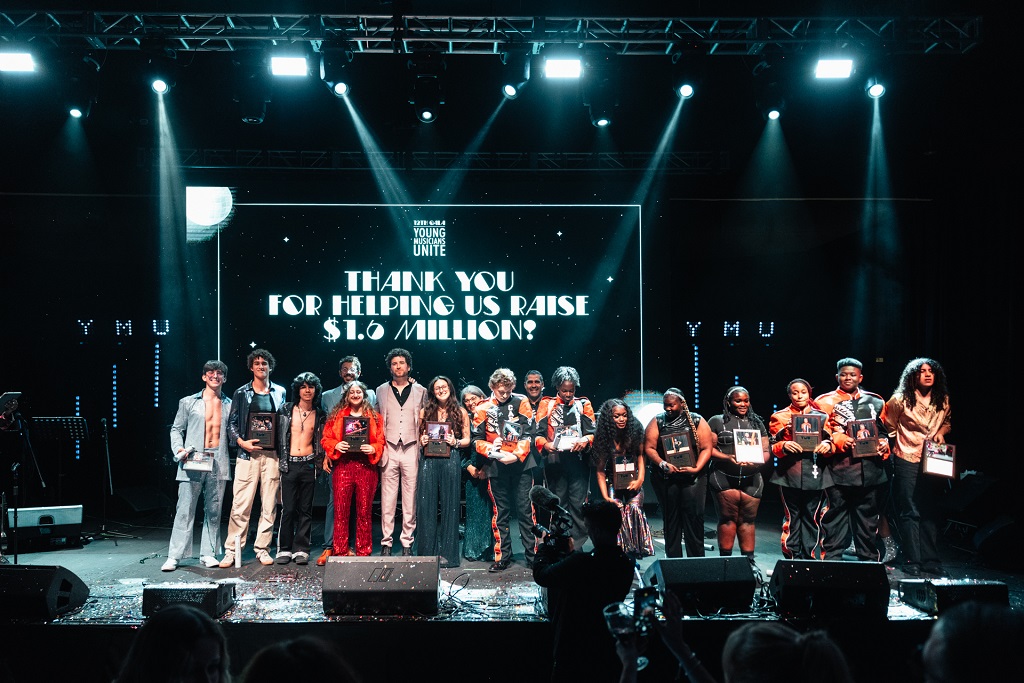
What’s resonating right now is the energy around our students and our community. The gala is a celebration. When people experience our young musicians performing, see their confidence, and feel the joy in the room, it’s powerful. It brings everything into focus, real kids, real talent, real growth happening right in front of you.
There’s also something special about bringing Miami together in that way. Families, supporters, artists, and community leaders all in one room, celebrating the next generation. It becomes more than an event, it feels like a shared moment for the city.
Even if you’re not attending, there are still meaningful ways to support. You can donate, sponsor a student or a school, support the auction, or help spread the word. Every bit of support helps us keep these opportunities free and growing for our students. Please visit www.ymu.org
This year’s Havana Nights theme draws from a rich cultural moment. How does celebrating music and culture in this way reflect YMU’s mission and the communities you serve in Miami-Dade?
Miami is one of the most culturally vibrant cities in the world, and music sits at the center of that identity. Havana Nights reflects the communities we serve every day. Many of our students come from families where music is deeply tied to culture, heritage, and storytelling.
Celebrating that on stage is not just about a theme. It’s about honoring where our students come from, creating pride, and bringing people together across generations. It allows young people to see their culture reflected at a high level, in a space that celebrates them.
At the same time, it mirrors what we do every day in our programs. We meet students where they are, we connect through the music they relate to, and we create spaces where they feel seen, valued, and inspired. That’s what this night represents: a celebration of culture, community, and the next generation of Miami.
YMU aims to raise $2 million to support over 15,500 students across 105 schools next year. What will that funding unlock for students who otherwise wouldn’t have access to music education?
It unlocks access, consistency, and real pathways for students. For many young people, this is the difference between having music in their lives or not. It means walking into a classroom with instruments, trained educators, and a program they can count on throughout the school year.
It also opens the door to deeper opportunities: after-school ensembles, more than 200 performances each year, recording in a professional studio, mentorship, and exposure to college and careers in the creative industries.
It also allows us to continue expanding our reach. In Central Miami-Dade, we are deepening and growing our presence, while in West Miami-Dade, we are expanding into entirely new communities.
Our long-term goal is to serve every Title I school in the county, all 255 of them. This funding helps us move closer to that, building toward a future where access to music education is consistent, reliable, and available to every student.
Since serving more than 35,000 students, what are some of the most meaningful success stories or outcomes you’ve seen from participants?
We have seen students earn full scholarships, perform at Carnegie Hall, and go on to careers in music and beyond. But the most meaningful outcomes are often the ones that happen quietly.
Students who were disengaged begin showing up to school. Students find a sense of belonging. Students step into leadership for the first time and start to see themselves differently.
I think about one student who was on the verge of being expelled, constantly getting into fights. We brought him in, gave him responsibility, kept him close, and made him a leader in the classroom. Over time, everything shifted.
He began mentoring other students, holding himself to a higher standard, and showing up in a completely different way. He went on to earn a full scholarship to Florida State and perform at Carnegie Hall. That is what this work does. It changes trajectories, not just for a moment, but for a lifetime.
YMU focuses on in-school programming at scale. What gaps in traditional education systems are you aiming to fill, particularly in underserved communities?
The biggest gap is consistent, high-quality access to the arts, especially within a student’s own community. In many of the schools we serve, music programs have disappeared or have been reduced to the point where students never really get the chance to engage.
At the same time, those same students are often dealing with real life challenges at home.
While school choice exists, it often requires families to have the time, transportation, and resources to access it. For many of the families we serve, that is not realistic.
So instead of expecting students to leave their community to find opportunity, we believe the opportunity should exist where they already are.
We focus on building within communities through feeder patterns, the natural progression of schools in a neighborhood from elementary to middle to high school. By working across entire feeder patterns, we’re able to give students a consistent experience over time.
Music becomes part of the school culture. It gives students a creative outlet, a sense of belonging, and a reason to stay connected.
As leaders, how do you balance rapid growth with maintaining the quality and consistency of programming across so many schools?
We think about it as balancing breadth and depth. Breadth is about reaching as many students as possible so no child is left behind. Depth is about making sure the experience is strong enough that no student outgrows the program.
That means creating different levels of engagement. For some students, it starts with music in the classroom. For others, it grows into ensembles, live performances, show series, and recording in a professional studio. There is always a next step.
Maintaining that balance comes down to people and systems. We run fast and operate like a startup, but we are building in one of the most expensive cities in the country with a high-quality teaching workforce.
That requires strong recruitment, training, support, and culture.
At the end of the day, this is about building systems that can scale without losing quality, and investing in the educators who make it possible.
Looking ahead, what is your long-term vision for YMU, and how can the broader community continue to support and get involved beyond events like the gala?
We want every child in Miami-Dade to have access to high-quality music education. Every child.
That requires alignment between philanthropy, government, schools, and community organizations around a shared commitment to sustained access. No one organization can do this alone.
There are many ways to be involved beyond the gala: performances throughout the year, student showcases, festivals, sponsorships, hiring student groups, and staying engaged with the work.
Our goal is to build toward $50 million in recurring revenue. At that level, we can support a countywide arts education infrastructure that ensures access for every child, year after year, with true sustainability.